- info@digitalworld.co.ke
- Nairobi, Kenya

Software Development Companies in Kenya | Digital World

03
Nov
Software Development Companies in Kenya: A Complete Guide to Choosing the Right Technology Partner
Kenya's business environment is becoming increasingly digital. From small businesses and startups to established enterprises, organizations are investing in technology to improve efficiency, serve customers better, automate operations, and remain competitive.
As a result, the demand for reliable software development companies in Kenya continues to grow.
Whether you need a business management system, a mobile application, an e-commerce platform, or custom enterprise software, choosing the right software development partner is an important business decision.
This guide explains what software development companies in Kenya offer, the types of solutions available, what to consider when choosing a developer, and how the right technology partner can help your business grow.
What Is Software Development?
Software development is the process of designing, building, testing, deploying, and maintaining computer applications and digital systems.
These solutions help businesses automate processes, manage information, communicate with customers, process transactions, and improve productivity.
A software development company brings together professionals such as software engineers, web developers, UI/UX designers, database specialists, and quality assurance engineers to create digital solutions.
Services Offered by Software Development Companies in Kenya
1. Custom Software Development
Custom software is developed specifically to meet the requirements of an individual business.
Examples include:
- Enterprise resource planning systems.
- Customer relationship management software.
- Inventory management systems.
- Human resource management platforms.
- School management systems.
- Hospital management systems.
- Accounting and financial management applications.
Custom software allows businesses to build solutions around their actual operations instead of adjusting their processes to fit generic applications.
2. Web Application Development
Web applications enable users to access business services through internet browsers.
Examples include online booking platforms, customer portals, business dashboards, online marketplaces, and management systems.
A professional web application should be secure, responsive, scalable, and easy to use.
3. Website Development
Professional website development helps businesses establish their online presence and communicate their products and services to potential customers.
Services may include:
- Corporate website development.
- E-commerce website development.
- WordPress website development.
- Custom website development.
- Website redesign.
- Website maintenance.
- Search engine optimization.
4. Mobile Application Development
Mobile applications help businesses connect with customers through smartphones and tablets.
Software developers can build Android applications, iOS applications, or cross-platform applications using technologies such as Flutter and React Native.
5. API and Payment Integration
Modern business applications often need to communicate with external services.
In Kenya, important integrations include:
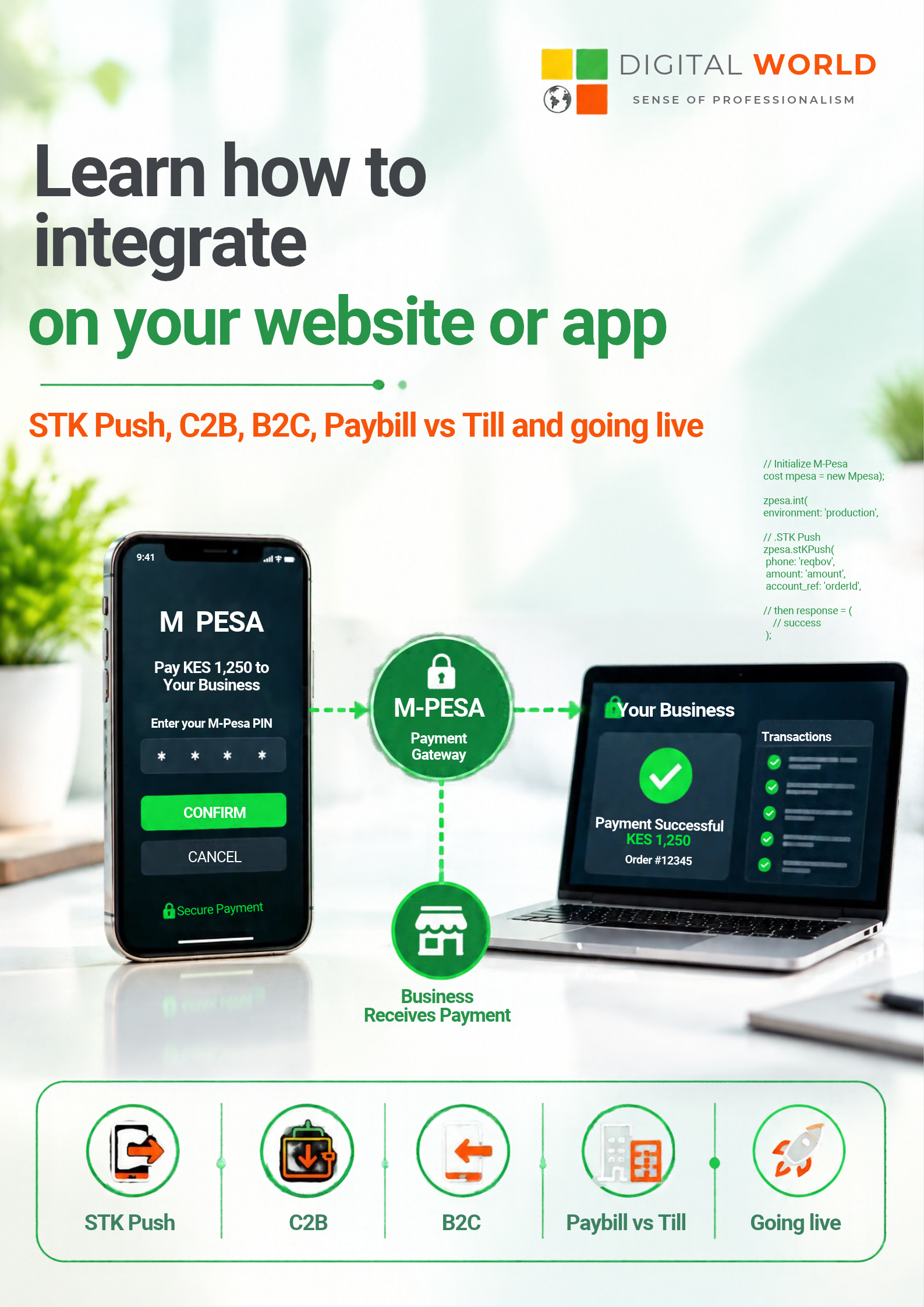
- M-Pesa payment integration.
- Payment gateway integration.
- SMS and email notification systems.
- Accounting integrations.
- Third-party business APIs.
These integrations help automate transactions and improve the customer experience.
How Much Does Software Development Cost in Kenya?
Software development costs depend on the complexity of the project, the number of features, integrations, design requirements, security requirements, and ongoing maintenance.
A simple application may require significantly less investment than a large enterprise platform.
Before requesting a quotation, define:
- The problem your software should solve.
- The intended users.
- The features you require.
- Whether you need web, mobile, or both.
- Any integrations required.
- Your expected launch timeline.
Request a detailed quotation that separates development, hosting, maintenance, and third-party service costs.
How to Choose the Best Software Development Company in Kenya
Choosing a development partner requires more than comparing prices.
Consider the following factors:
1. Technical experience
Look for a company with experience developing solutions similar to your project.
2. Portfolio and previous projects
Review completed websites, applications, and software systems to understand the quality of its work.
3. Understanding of your business
The developer should understand your business processes before recommending a technical solution.
4. Security and reliability
Ask about data protection, access controls, backups, testing, and software maintenance.
5. Communication
A reliable development partner should provide regular updates, clear timelines, and opportunities to review progress.
6. After-sales support
Software requires updates, maintenance, security improvements, and sometimes additional features.
Choose a company that can support your application beyond its initial launch.
Why Kenyan Businesses Need Custom Digital Solutions
Businesses operating in Kenya face specific operational requirements.
For example, a retail business may need inventory management connected to M-Pesa payments. A school may need automated fee tracking and parent communication. A logistics company may require fleet management and delivery tracking.
Generic software does not always address these requirements effectively.
Custom software development allows businesses to build systems that reflect their workflows, customer expectations, and growth plans.
The Future of Software Development in Kenya
Several technologies are shaping the Kenyan technology industry.
These include artificial intelligence, cloud computing, mobile applications, business automation, financial technology, cybersecurity, and data analytics.
As more organizations adopt digital systems, the demand for skilled software developers and innovative technology companies will continue to create opportunities.
Businesses that invest in the right technology can improve efficiency, reduce repetitive work, and deliver better customer experiences.
Partner With a Professional Software Development Company in Kenya
Choosing the right technology partner can transform how your business operates.
At [Your Company Name], we help businesses explore digital solutions through professional software development, web application development, mobile application development, and business automation.
Whether you are planning a new application or looking to improve an existing business system, we can help you turn your idea into a practical digital solution.
Contact [Your Company Name] today to discuss your software development project in Kenya.
Frequently Asked Questions
Which is the best software development company in Kenya?
The best company depends on your project requirements, budget, technical needs, portfolio, and support expectations. Compare several providers before making a decision.
How much does custom software development cost in Kenya?
The cost depends on functionality, complexity, integrations, security requirements, and development time. Request a project-specific quotation.
Can I hire a Kenyan company to develop software for my business?
Yes. Kenyan software development companies serve startups, SMEs, institutions, and larger organizations across different industries.
How long does software development take?
A simple application may take weeks, while complex enterprise platforms can take several months or longer.
Do software development companies provide maintenance?
Many companies offer maintenance services, including bug fixes, updates, security improvements, backups, and technical support.
Can software developers integrate M-Pesa into my application?
Yes. Applications can integrate with Safaricom's Daraja API to support payment features such as STK Push, subject to the relevant technical and business requirements.